
 MyPlate is the nutrition guide that the United States Department of Agriculture (USDA) publishes as a recommendation for Americans. As seen in the picture below, it depicts a plate with all four food groups—fruits, vegetables, grains, and protein—with a cup of dairy on the side. The plate is sectioned out to show the recommended portion sizes for each food group. Healthy eating is easy with the MyPlate method because it does not require the use of instruments such as scales or measuring cups to portion foods. It only requires following the guidelines below:
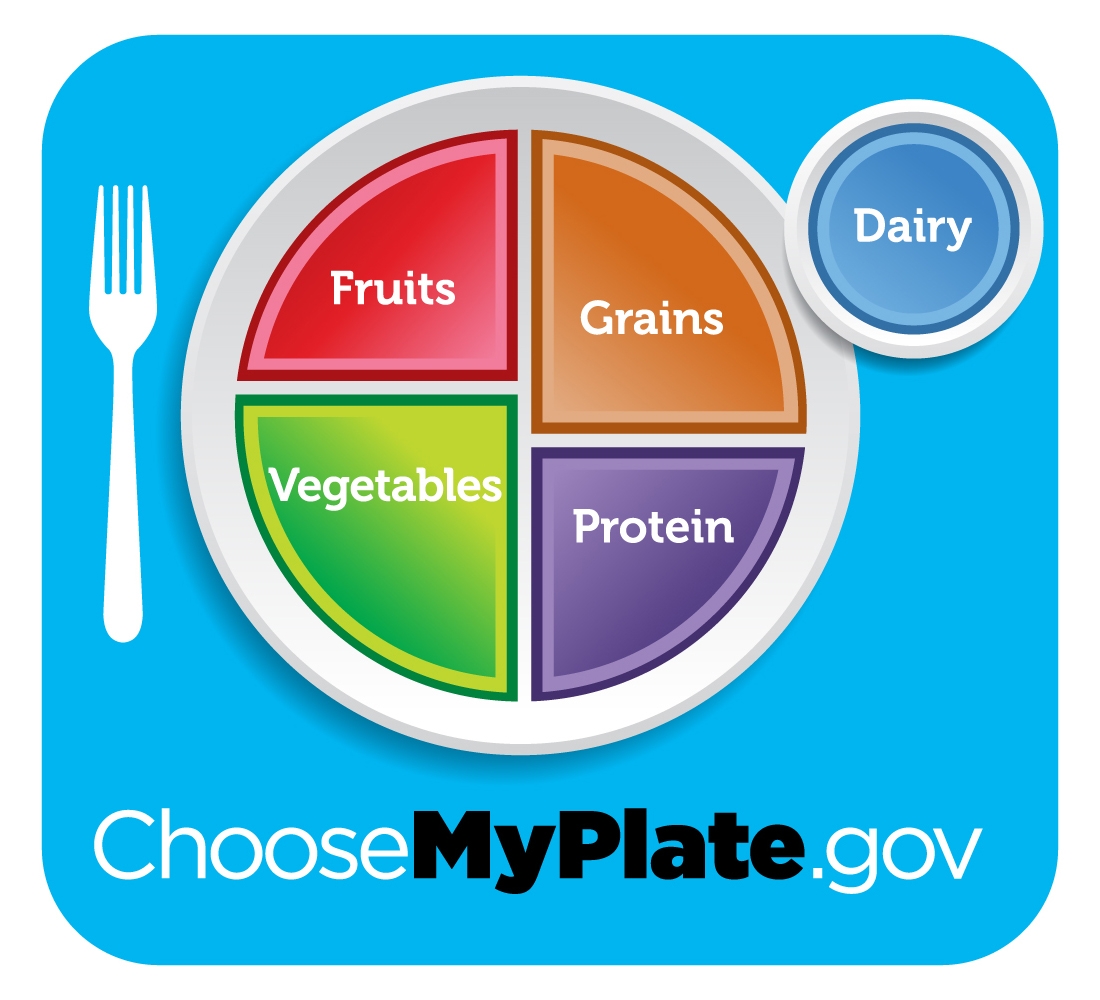
- Half of the plate should be filled with fruits and vegetables. This ensures that the 5 to 9 servings of fruits and vegetables recommended daily are included in the diet. A variety of fruits and vegetables of different textures and colors should be included—a rainbow is the goal. This is because each color provides different nutrients. Vegetables can be prepared in many different ways—steamed, roasted, stir-fried, and seasoned with different herbs and spices are just a few of them!
- Grains should make up a little over 25% of the plate. Whole grains should comprise half or more of each person’s total daily grain intake, which is easy to do with the wide variety of whole grain products available, including whole wheat bread, whole grain pasta, and brown rice. Watch the video from the USDA below for more information on whole grains.
- Protein makes up the last section of the plate, a little less than 25%. This group includes animal sources such as fish and lean cuts of meat such as chicken and beef, as well as plant sources of protein such as beans, nuts, seeds, lentils, and soybean products.
- Three servings of dairy should be included per day to provide nutrients such as calcium and vitamin D. Low-fat (1%) or skim milk are the best options because they provide the standard amount of vitamins, minerals, and other nutrients, with fewer fat and calories compared to whole and reduced-fat (2%) milk . Light soymilk and the variety of nut milk alternatives are great options for individuals who don’t drink dairy as long as they are brands that are fortified with calcium and vitamin D. It is important to note, however, that soymilk is the only plant-based milk that has an amount of protein that is comparable to cow’s milk. Fortified oatmeal, soybeans, and broccoli are all foods that are also high in calcium. Additional high calcium foods can be found on the National Institute of Health’s website.
MyPlate can be used in the daily lives of all Americans to help each person eat healthy, well-balanced meals because it allows for the incorporation of those foods that are most nutritious, rather than the exclusion of those that are not. Choose MyPlate.gov for more information about MyPlate and eating healthy. Specific tips and resources are also included, including Healthy Eating on a Budget and more details on each of the five food groups. Happy Eating!
Jaclyn Rangel has a Bachelor of Science in Clinical Nutrition from the University of California, Davis and is currently a Dietetic Intern at the VA Medical Center in Memphis, Tennessee.
Topics in this story
More Stories

Summer can be a joyful time of year, but some outdoor activities can be hard for some Veterans. In this guest post, former VA Secretary Bob McDonald shares resources and plans to navigate summer activities.

"A CAPITOL FOURTH" airs on PBS Thursday, July 4, 2024 from 8:00 to 9:30 p.m. E.T.

The following is an account from Army Veteran Robert Pryor on how he was able to find and reconnect with the pilot who saved his life in Vietnam.