


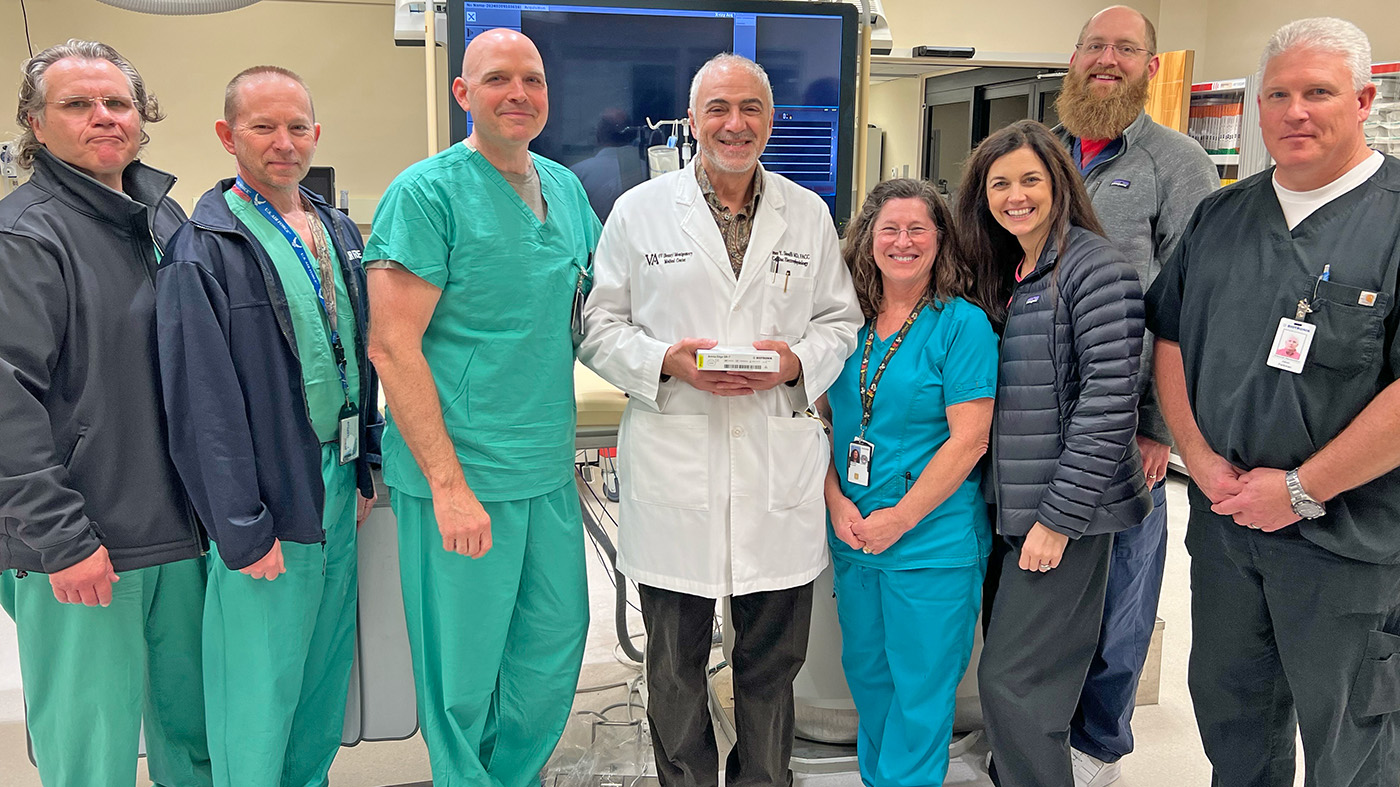
G.V. (Sonny) Montgomery VA in Jackson, Miss. recently became the first hospital in Mississippi to implant a Biotronik Amvia cRTP (pacemaker), marking a significant advancement in patient care.
A pacemaker monitors the heart’s rhythm, detects irregularities and corrects them with electrical impulses. This particular device differs from other implantable pacemakers in that it helps the heart’s lower chambers—the ventricles—work in tandem. To do this, it has three leads—wires that deliver energy to the heart—rather than one or two as in other pacemakers.
“Our goal always is to help our Veterans have a better quality of life,” said Cardiologist Dr. Samer Y. Siouffi, who has extensive experience in cardiac electrical system and cardiac implantable device procedures. “This device improves a patient’s heart failure symptoms like fatigue, shortness of breath and exercise intolerance.”
Surgery sequence
After preparing the incision site, a surgeon makes a small cut in the patient’s upper chest well below the shoulder. Three leads are then inserted into a major vein near the collarbone. Using X-ray for visibility, the surgeon guides the leads through the veins and places them in the heart’s upper and lower chambers. Then the surgeon implants a tiny defibrillator in a pocket created at the incision beneath the skin. The leads are connected to the defibrillator which is programed for the patient’s specific medical needs.
Up to 75% of patients with a cardiac implantable device will need magnetic resonance imaging (MRI) in their lifetime. Unlike other pacemakers, this new technology allows the patient to have an MRI without placing the pacemaker on ‘standby.’
The cardio-pulmonary team at Jackson VA consists of cross-trained catheterization laboratory (Cath-Lab) employees shared by the cardiology and pulmonology divisions.
“Our cardio-pulmonary team strives to offer our Veterans the latest and the best in the field of surgery,” said Chief of Staff Dr. Rachel Peery. “We will serve every Veteran as well as they have served us.”
Topics in this story
More Stories
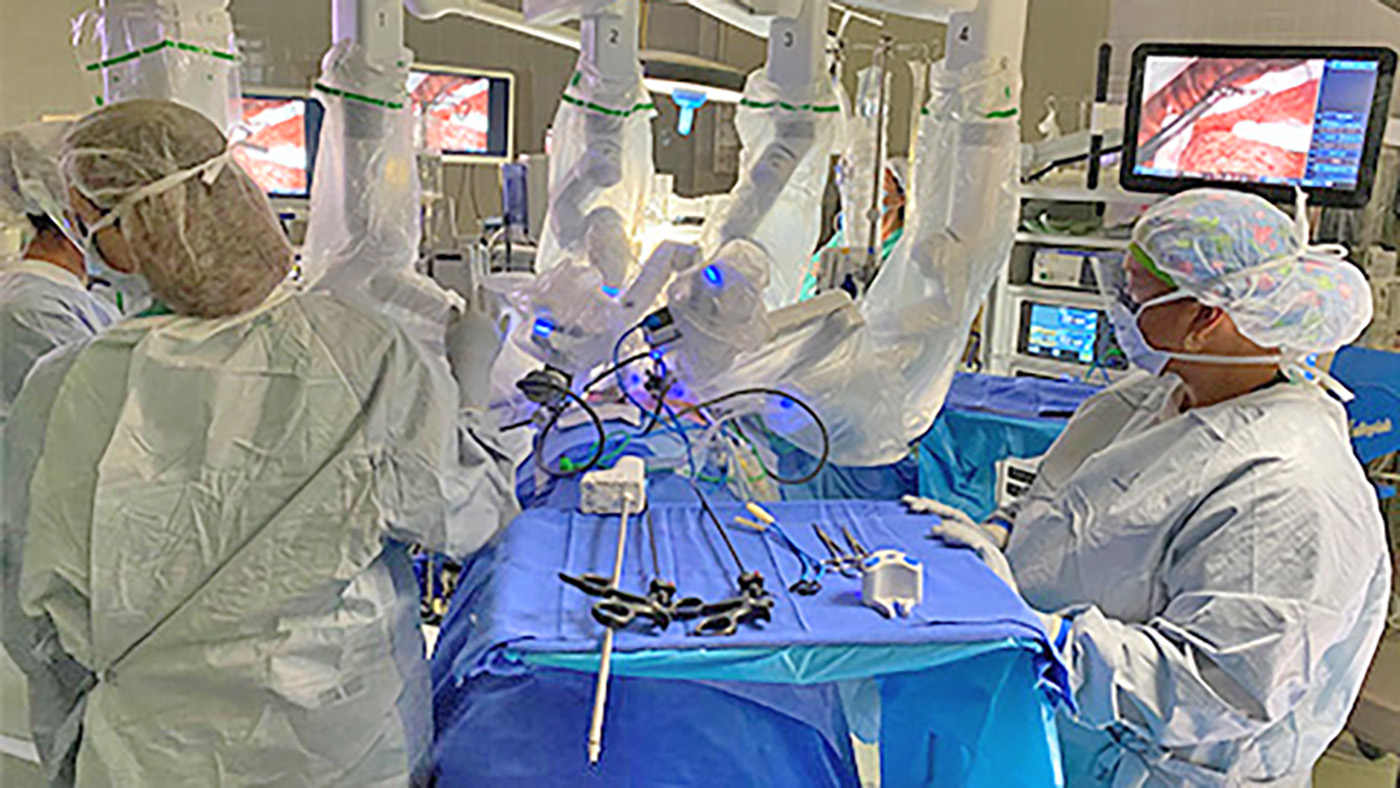
Columbia VA’s robotic surgery teams completed their 800th robotic surgery and are on schedule to hit 1,000 by the end of the year.

In a decentralized clinical trial, Veterans can participate from their own homes or local VA instead of having to travel to a research site.

After serving in the Air Force for 25 years, Larry Wilson is now a My HealtheVet coordinator helping Veterans navigate their care.


Is this only for those with arrhythmias or is it effective for those with significant cardiomyopathy?
Need one of these asap