


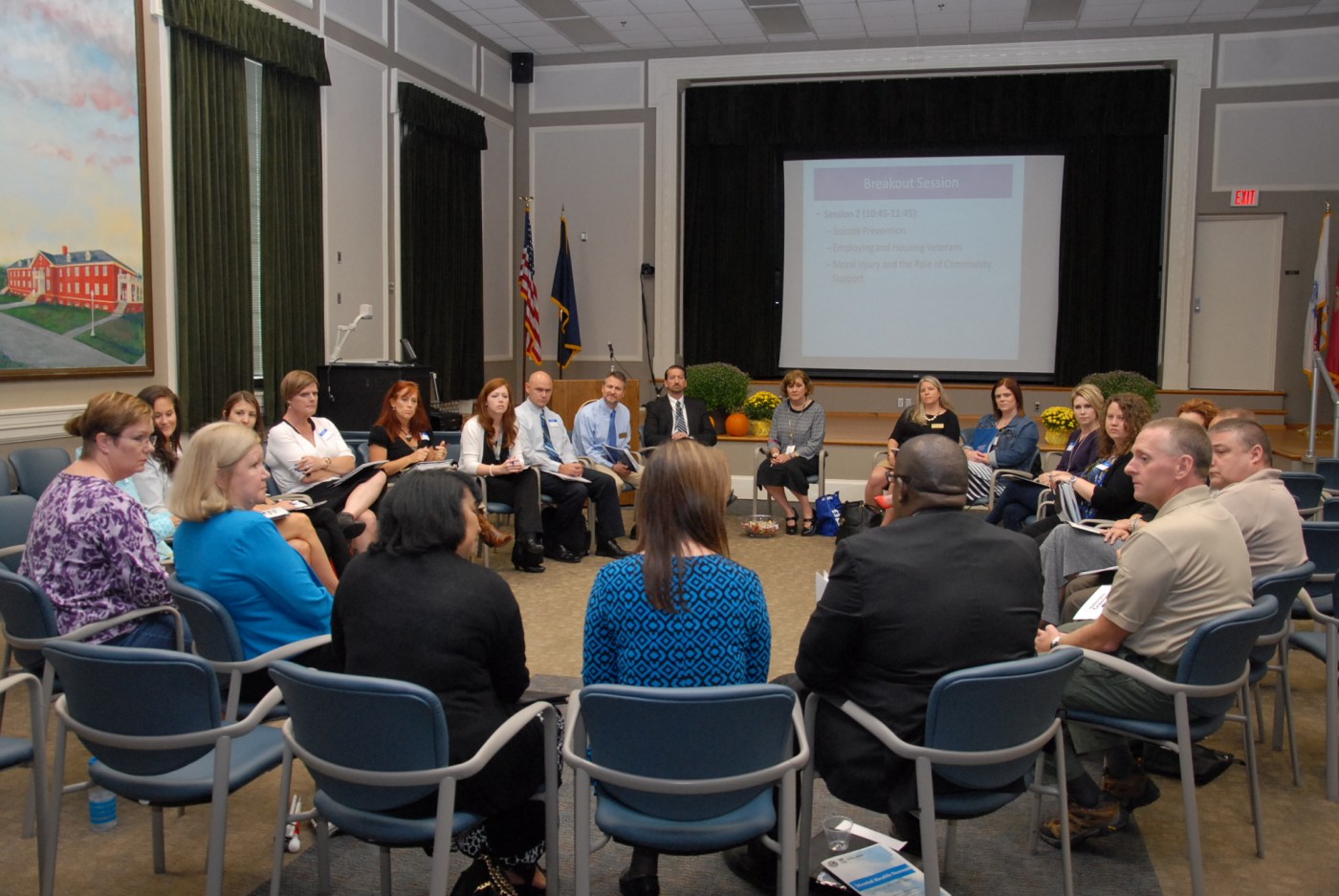
The Lexington VA Medical Center held its third annual Mental Health Summit on Sept. 25, 2015. The daylong event brought together VA staff and community partners to discuss the mental health needs and available services for Kentucky Veterans. There were more than 120 attendees who learned from Veterans sharing their personal experiences, participated in breakout sessions and toured a resource room filled with information about both community and VA resources.
Summit participants were welcomed by Lexington VAMC’s chief of staff Patricia Breeden, MD, Mental Health Services provider Kevin Pernicano, PhD, ABPP and Assistance chief Autum McCane, PhD. Commissioner of the Kentucky Department of Veterans Affairs, Heather French Henry, also welcomed summit guests. A spotlight lit up the auditorium stage to illustrate this year’s Summit theme, Serving Those Who Served, and several people, including Veterans, family members, and providers, came to the stage to share their “I am….” stories. Centered’s Lauren Higdon, LMT, CYT, stated, “I especially loved the personal testimonials at the beginning of the day as they invited a more relevant, intimate and connected experience for the day.”
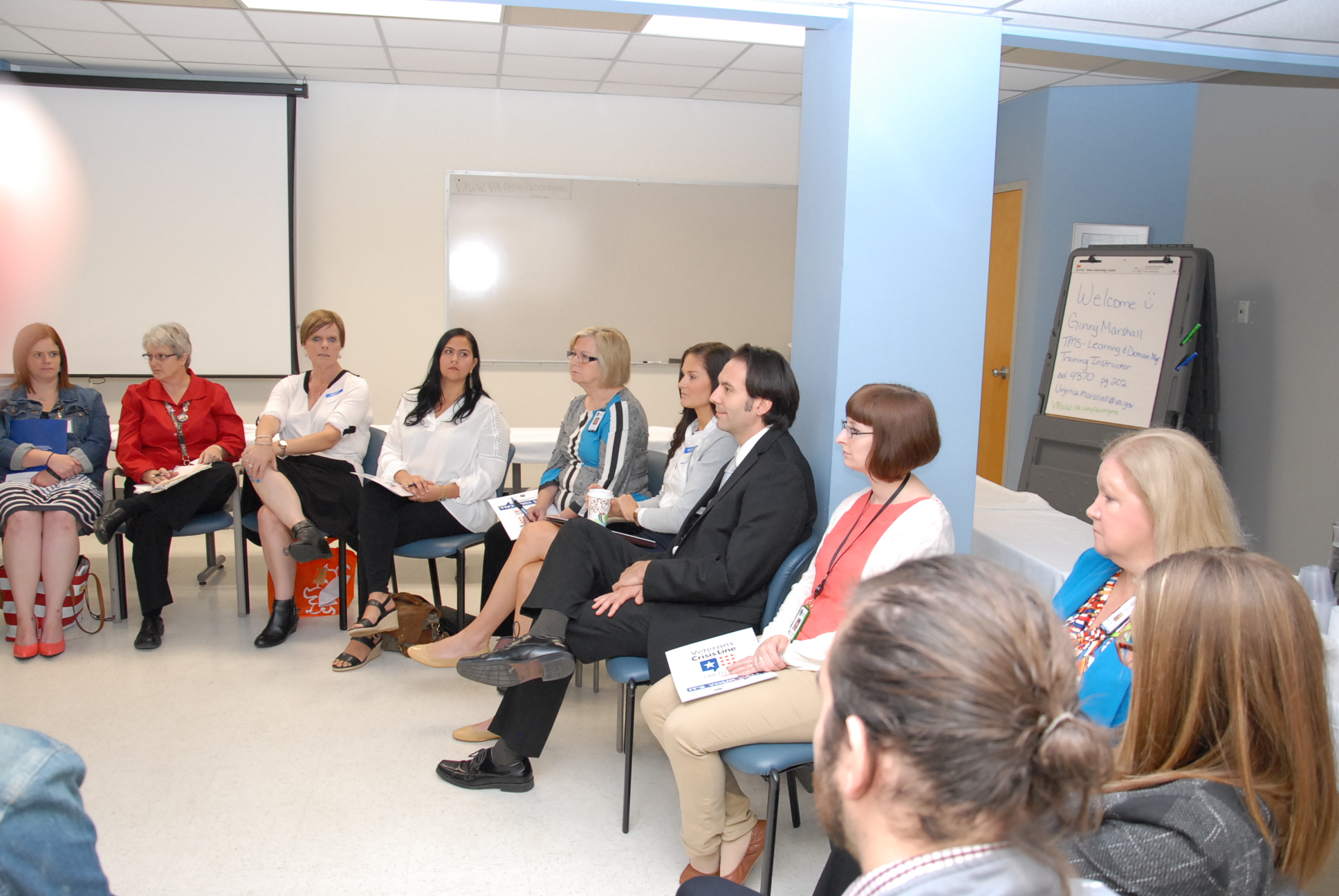 Breakout sessions focused on pertinent Veteran topics that were introduced in the “I am…” statements, including preventing Veteran suicide, Military 101, treatment considerations for LGBT and women Veterans, substance abuse treatment options, student Veterans, self-care for providers, moral injury and the role of community support, and employing and housing Veterans. VA staff and community providers worked together to identify resources and potential gaps in services, brainstorm innovative ideas for new services and share contact information. Contemporary and alternative methods for addressing mental health care needs were a focus in several of the breakouts, such as in the self-care for providers session led by Centered that incorporated aspects of yoga, aromatherapy, healing touch, and massage, and the substance abuse treatment options session that discussed the use of naloxone kits for opiate users.
Retired Lieutenant Colonel and the director of the University of Kentucky Veterans Resource Center, Anthony Dotson, MS, MMAS, noted, “I very much liked the wide variety of topics presented and the variety of subject matter expertise. This wasn’t VA telling everyone how to solve Veterans issues, but a legitimate collaboration of community expertise and experience.”
Lexington VA Medical Center psychologist and treatment considerations for LGBT Veterans breakout co-leader, Stephen Hansel, PsyD, shared, “Community attendees consistently noted that it was wonderful to see VA honoring diversity and emphasizing quality care for all Veterans.”
“The networking that was done was invaluable to all,” said Barbara Slater, PMHCNP, retired Army Reservist and practitioner from Summit Health who helped lead the treatment considerations for women Veterans breakout.
Two breakout sessions were also held with participants in the VA Caregiver Support Program to build a sense of community amongst caregivers, alert them to upcoming events and to provide simple ways to improve their self-care. Jody Eye, PsyD, Lexington VA Medical Center psychologist for the program, who co-lead the first breakout with program coordinator, Jill Smith, LCSW, noted, “It was really powerful to witness caregivers connecting and supporting one another. So much of our focus is on Veteran care that we don’t often think about who cares for these individuals when they aren’t in our offices.” Caregiver support participants then engaged with Centered staff in learning self-care activities and left the campus with aromatherapy care packets.
During the lunch and learn portion of the day, participants were invited to tour Lexington’s Mobile Vet Center, gather information in the resource room, and listen to talks on naloxone kits, military 101, and the VA Caregiver Support Program. The resource room was comprised of agencies that offer recreational activities to Veterans and their families, such as the Life Adventure Center and Central Kentucky Riding for Hope, and holistic treatments, including Lexington Healing Arts, Centered and the Mind Body Studio.
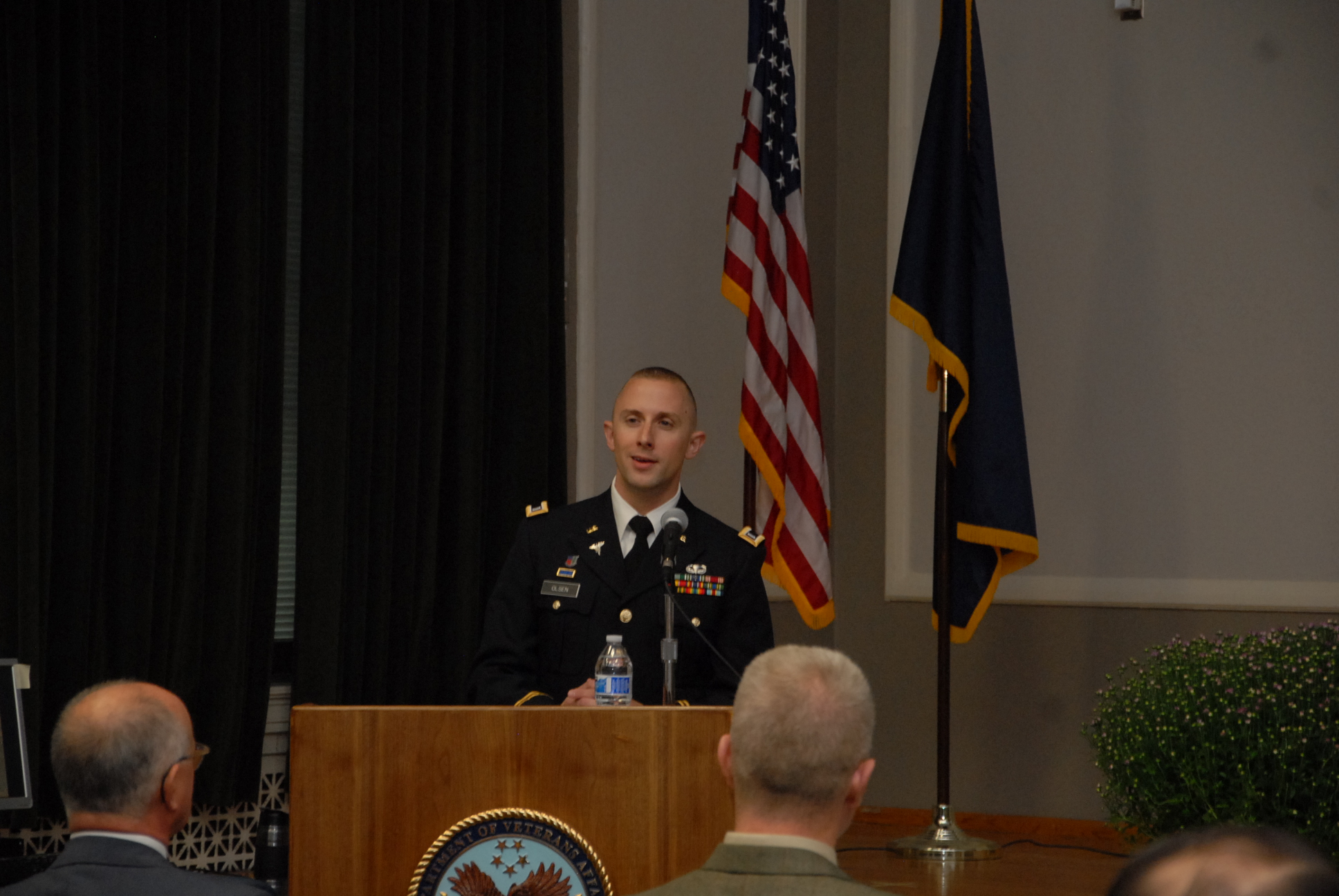 Timothy Olsen, CSW, Kentucky Army National Guard Behavioral Health Officer, spoke passionately to the audience about military culture and mental health stigma. Rounding out the day was an emotional speech from James Watts, LCSW, Social Work Service Chief and retired Marine, that moved the audience to tears as he humbly spoke about his bravery and sacrifice.
Dr. McCane concluded the summit by asking attendees to commit to continued collaboration and innovation over the next 12 months. Breakout session leads then shared what their intended next-steps would be fulfill this commitment.
A next-step for Mental Health Services at the Lexington VA Medical Center is to continue the momentum generated at this event by hosting a Summit at the VA Clinic in Hazard, Kentucky, to address the needs of rural Veterans.
“It was a very moving and invigorating day,” shared W.E. Harris, Jr., PhD of the Federal Correctional Institution in Manchester, Kentucky, a sentiment that rang true for many who attended.
About the authors: S. Autumn McCane, PhD, is assistant chief of the Lexington VA Medical Center’s Mental Health Services. Jody P. Eye, PsyD, is a licensed clinical psychologist with Lexington’s Caregiver Support Program.
Topics in this story
More Stories
Study underscores important role COVID vaccination can have in protecting Veterans from infection and reducing long-term health consequences
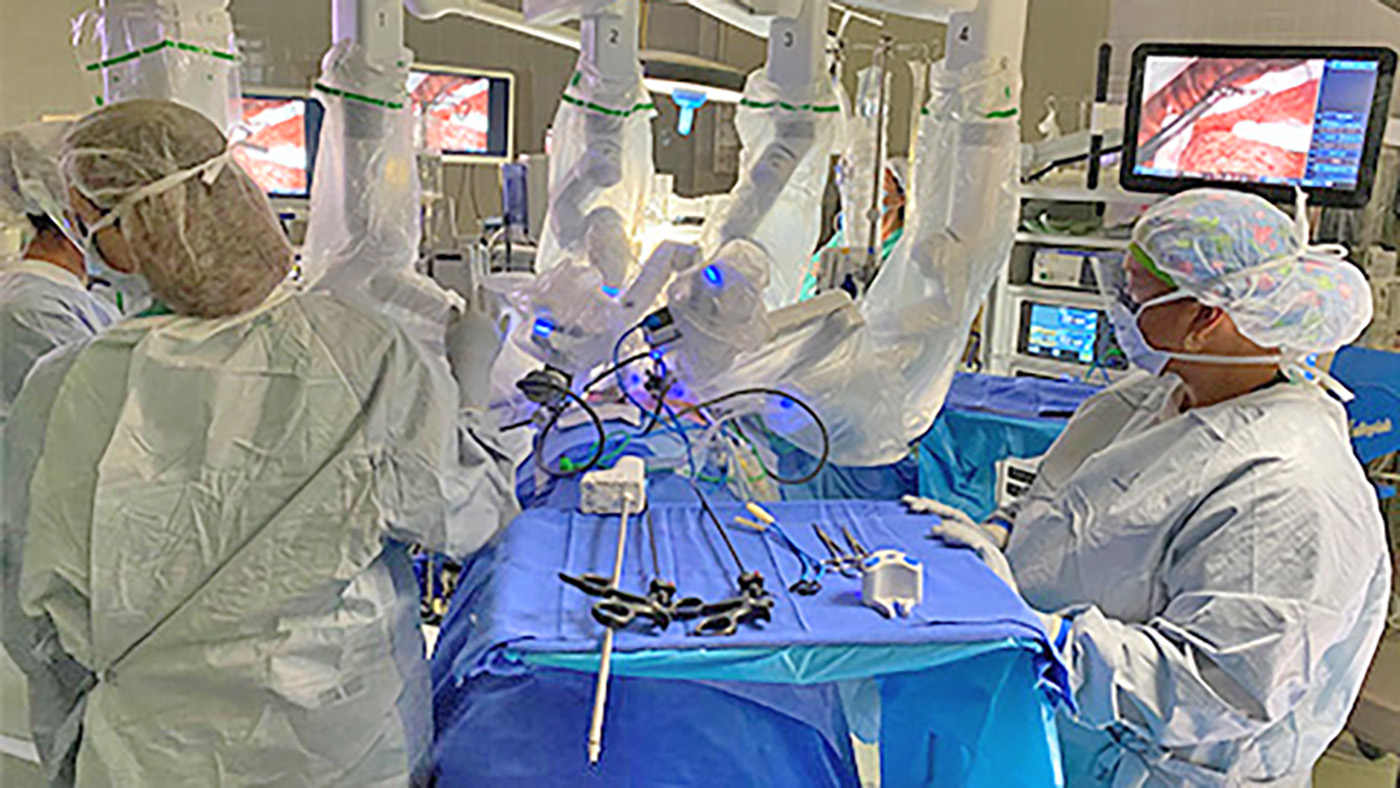
Columbia VA’s robotic surgery teams completed their 800th robotic surgery and are on schedule to hit 1,000 by the end of the year.

In a decentralized clinical trial, Veterans can participate from their own homes or local VA instead of having to travel to a research site.


It is very important that events and initiatives such as these continue to forge bonds within the Veteran community and between Veterans and those delivering mental health care. I know from experience that there are many Veterans that need help, but are unsure how to take the first step to get this help. Breaking down barriers and stigma is a good way to encourage more people to come forward with their problems and experiences.