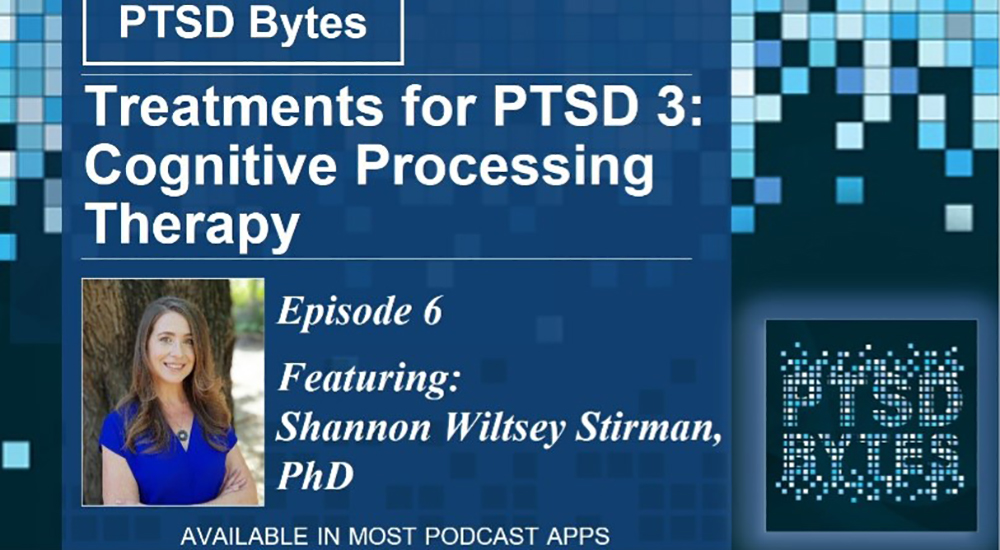
In this episode of PTSD Bytes, host and clinical psychologist Pearl McGee-Vincent from the VA National Center for PTSD discusses cognitive processing therapy (CPT).
Her guest is Dr. Shannon Wiltsey Stirman, a clinical psychologist and implementation scientist at the National Center for PTSD and associate professor at Stanford University.
Listen to “#6: Treatments for PTSD 3: Cognitive Processing Therapy” on Spreaker.
CPT helps people with PTSD understand why they might not be recovering from the traumatic events they have experienced. It can help you examine how the trauma may have changed the way you view yourself and the world around you, and consider other ways of thinking.
For example, you may learn to think about the trauma in terms of what happened, instead of blaming yourself. CPT is a trauma-focused treatment, meaning that while you do not need to repeatedly go over what happened during the traumatic event(s) itself, you do need to be able to discuss memories related to it.
Someone with PTSD may try CPT when they realize what they’re doing is not working well or their world has gotten smaller.
Benefits of CPT
By thinking differently about the trauma, CPT can help you stop avoiding trauma reminders and do more things you used to do. Benefits of CPT can often be seen after only a few weeks. The main sign that the treatment is working is when you stop avoiding memories of their trauma and can more closely examine your responses to these memories.
Effectiveness of CPT
CPT has been shown to be effective for people who have experienced many different types of trauma, including abuse, assault, combat and job-related trauma. Additionally, CPT has been shown to be effective in different formats, such as individual or group. Taken together, CPT is a flexible treatment that works for many people.
Trying CPT
To try CPT, you can start by talking to a therapist or doctor about whether it is the right treatment for you. There are CPT-trained therapists at every VA facility as well as a registry of CPT-trained therapists on www.CPTforptsd.com.
The National Center for PTSD website also has information and videos about CPT. The key to CPT is to work at it consistently, even if it is only for a few minutes a day.
Technology and CPT
 The app CPT Coach is full of exercises and skills that people learn through CPT. Since it’s a mobile app, you can use it at any time, not just when you are with a therapist. Another benefit of the app is that you can send the exercises to your therapist so they can help you even more.
Overall, while CPT treatment with a therapist may only take place for a limited time, the app allows you to continue using the exercises and skills on your own.
CPT Coach download links: https://mobile.va.gov/app/cpt-coach.
Additional links:
If you are a Veteran who is experiencing a crisis or supporting a loved one who is, call 1-800-273-8255 and press 1 for immediate assistance, or chat online at VeteransCrisisLine.net/chat.
Topics in this story
More Stories
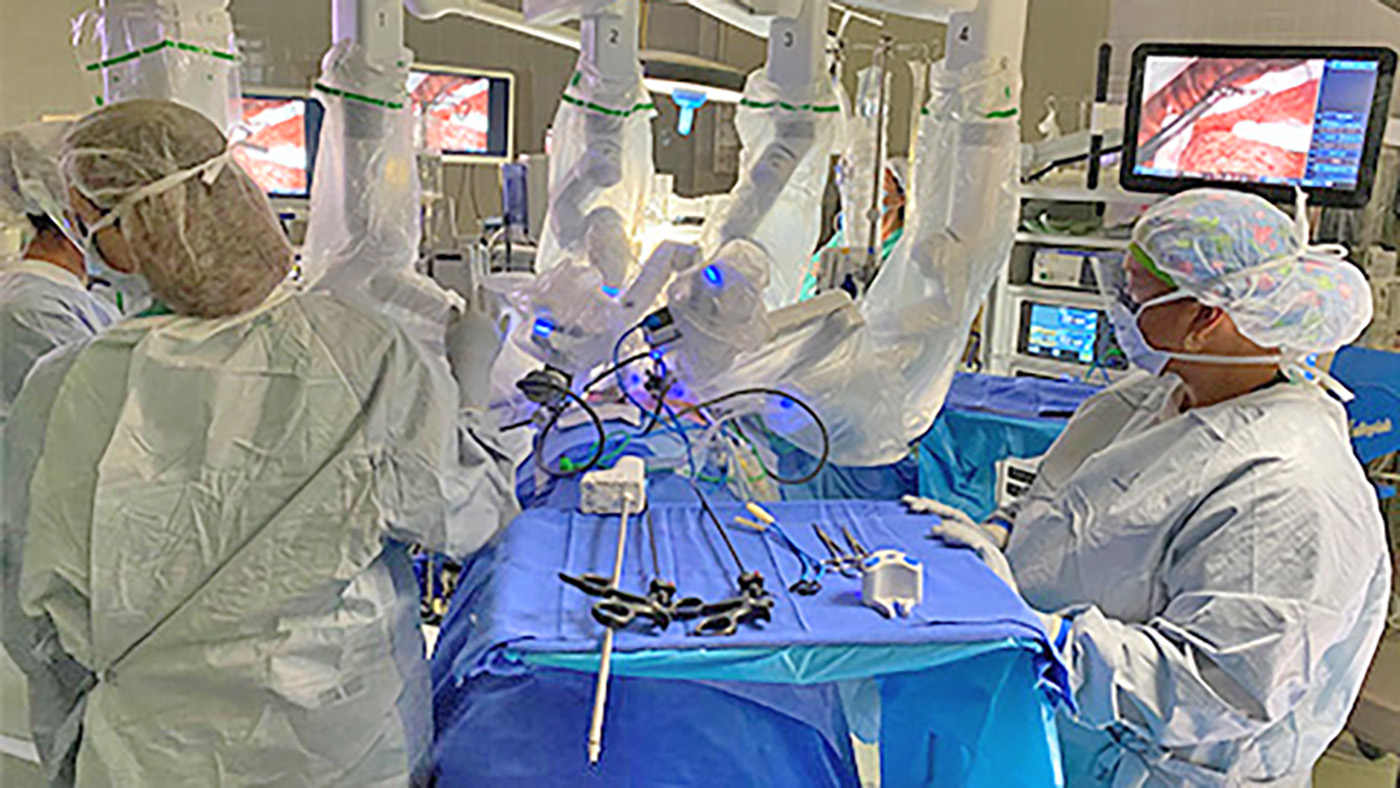
Columbia VA’s robotic surgery teams completed their 800th robotic surgery and are on schedule to hit 1,000 by the end of the year.

In a decentralized clinical trial, Veterans can participate from their own homes or local VA instead of having to travel to a research site.

After serving in the Air Force for 25 years, Larry Wilson is now a My HealtheVet coordinator helping Veterans navigate their care.